Castrol ON PG 25: The Future of Direct Liquid Cooling for High-Density Data Centres
Castrol ON PG 25 – As AI, machine learning and high-performance computing continue to push rack densities beyond the limits of traditional air cooling, Direct Liquid Cooling has become a critical enabler of next-generation data centre infrastructure. Here is where Castrol ON PG 25 come in.
At the heart of this transformation is Castrol ON PG 25, a purpose-built heat transfer fluid engineered specifically for Direct-to-Chip cooling applications. Designed for durability, efficiency and long-term protection, Castrol ON PG 25 is helping data centre operators unlock higher compute performance while improving energy efficiency and sustainability.
This guide combines Castrol’s official operating guidance and product data to explain how Castrol ON PG 25 supports reliable, scalable Direct Liquid Cooling deployments.
Why Direct Liquid Cooling Is Replacing Air Cooling
Traditional air cooling is no longer sufficient for modern CPUs and GPUs with rising Thermal Design Power (TDP). Today’s high-density servers demand a more efficient thermal solution.
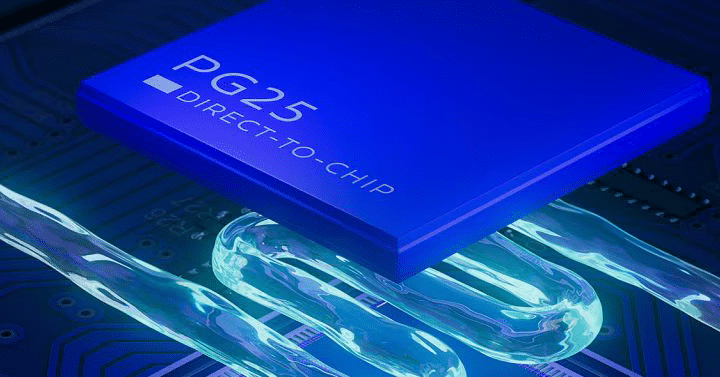
Direct Liquid Cooling (DLC) uses cold plates mounted directly on heat-generating components. Heat is transferred into a liquid coolant which is circulated through a closed-loop system to a heat exchanger via a Coolant Distribution Unit (CDU).
This approach delivers:
-
Higher heat transfer efficiency
-
Support for ultra-high rack densities
-
Lower energy consumption
-
Reduced fan power
-
Improved system reliability
Introducing Castrol ON PG 25 for Direct Liquid Cooling
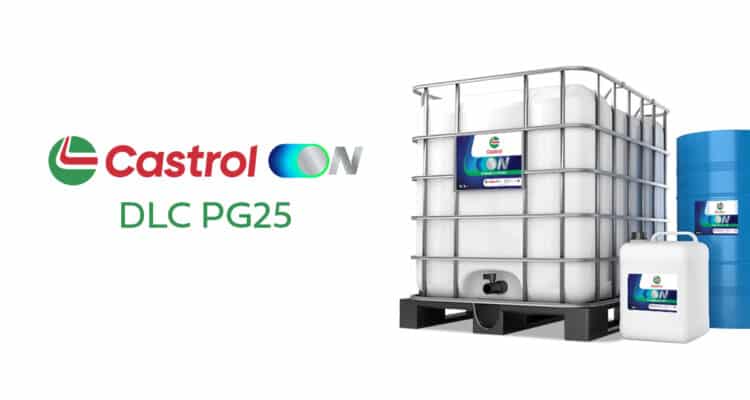
Castrol ON Direct Liquid Cooling PG 25 is a fully formulated, ready-to-use propylene glycol-based heat transfer fluid developed specifically for Direct-to-Chip cooling in data centre and edge environments.
It has been engineered to meet the demanding thermal, material compatibility, and reliability requirements of modern digital infrastructure.
Key Benefits of Castrol ON PG 25
-
Optimised heat transfer properties
-
Long fluid life and durability
-
Excellent corrosion protection
-
Stability with no deposits or scaling
-
Biostable formulation to prevent bacterial growth
-
Non-harmful propylene glycol base
-
Ready to use with no dilution required
The fluid is supplied pre-diluted, saving installation time and eliminating on-site mixing risks.
Designed for Modern Direct Liquid Cooling Systems
Castrol ON PG 25 is recommended for:
-
Direct-to-Chip cooling loops
-
Data centre cooling infrastructure
-
Computer room air conditioning (CRAC) systems
-
Datacom equipment cooling
-
Glycol loop heat exchangers
It is engineered to support cold plate cooling architectures where heat is transferred directly from CPUs and GPUs into a liquid circuit.
Material Compatibility You Can Trust
In Direct Liquid Cooling systems, fluid compatibility with wetted materials is essential. Castrol ON PG 25 has been extensively tested against a wide range of commonly used metals, alloys, elastomers and plastics in accordance with OCP (Open Compute Project) guidelines.
Compatible Metals and Alloys (Examples)
-
Copper and copper alloys
-
Aluminium
-
Stainless steel (304L, 316L and higher grades)
-
Titanium
-
Brass
-
Nickel and high-nickel alloys
Compatible Elastomers, Plastics and Sealants
-
EPDM
-
Viton
-
PTFE
-
FEP
-
Polypropylene (PP)
-
HDPE
-
PEEK
-
Industrial thread sealants (e.g. Loctite 567)
Castrol recommends verifying compatibility across the full system temperature range, especially for systems operating near the maximum recommended temperature of 65°C.
Safety and Storage Guidance
Before deployment, operators should always consult the latest Safety Data Sheet (SDS) and ensure compliance with local regulations.
Storage Conditions
-
Keep containers sealed until use
-
Avoid direct sunlight
-
Store below 30°C
-
Shelf life: 36 months
-
Expected system lifespan: 5 to 12 years (depending on system design and maintenance)
Operators should also be prepared for leak response with appropriate absorbent materials and containment equipment available on site.
Site Preparation and Installation Best Practice
Castrol recommends following OCP guidelines for system design and installation.
Installation Best Practices
-
Design filling and drainage points to allow top-ups without system downtime
-
Avoid stagnant pipework sections
-
Dynamically flush pipework to remove debris and contaminants
-
Ensure no chemical cleaning residue remains before filling
-
Design air bleed points at system high points
-
Prevent excessive pressure drop with correct pipe sizing
Mechanical engineers should always review system design holistically to ensure correct flow velocity, pressure balance and thermal performance.
Filling a New Direct Liquid Cooling System
When filling a new system with Castrol ON PG 25, Castrol recommends a structured commissioning process:
Commissioning Process
-
Measure fluid pH
-
Flush system at 60°C for 30 minutes
-
Sample and re-check pH
-
Perform a pressure test
-
Drain and refill with fresh fluid
-
Purge air from the system
-
Warm fluid to 35°C
-
Take retention samples (Day 0 and Day 1)
-
Verify appearance, pH and glycol concentration
Retention samples are kept for the lifetime of the fluid to establish a system performance baseline.
Ongoing Fluid Monitoring and Maintenance
Routine Monitoring (Quarterly)
At a minimum, the following parameters should be checked:
-
Appearance
-
pH (8.0 – 9.5)
-
Glycol concentration (24.5 – 29 vol%)
The fluid should remain clear, green in colour, and free from suspended matter.
Annual Laboratory Analysis
Annual testing should include:
-
Anions
-
Reserve alkalinity
-
Glycol concentration
-
Corrosion elements
-
Freeze point
-
OAT inhibitors
-
Electrical conductivity (optional)
Any out-of-specification results should be reviewed with Castrol technical support.
Typical Performance Characteristics of Castrol ON PG 25
From the Product Data Sheet:
-
Propylene Glycol Content: 25%
-
Freezing Point: -11°C
-
Boiling Point: 105°C
-
pH: 8.7
-
Thermal Conductivity (at 50°C): 0.492 W/mK
-
Specific Heat Capacity (at 50°C): 4.00 kJ/kg°C
-
Kinematic Viscosity (at 50°C): 1.2 cSt
This combination delivers excellent heat transfer with low pumping losses.
Why Data Centres Choose Castrol ON PG 25
Castrol ON PG 25 delivers a powerful combination of performance, protection and operational simplicity:
-
High-efficiency heat transfer
-
Extended corrosion protection
-
Long service life
-
Proven material compatibility
-
Biostable formulation
-
Ready-to-use fluid
-
Backed by Castrol global technical support
It is engineered for the realities of hyperscale, AI and edge computing environments.
Final Thoughts: Powering the Next Generation of Direct Liquid Cooling
As data centres evolve toward higher density and sustainability targets, Direct Liquid Cooling is becoming the new standard. But performance starts with the right fluid.
Castrol ON PG 25 provides the thermal efficiency, protection and durability required to support mission-critical compute at scale.
For operators deploying Direct-to-Chip cooling today — and building for tomorrow — Castrol ON PG 25 delivers confidence, reliability and performance.
Need Technical Support?
For system design guidance, compatibility testing or fluid analytics, contact your Kernow Oils representative or email:
 February 9, 2026