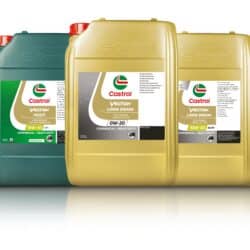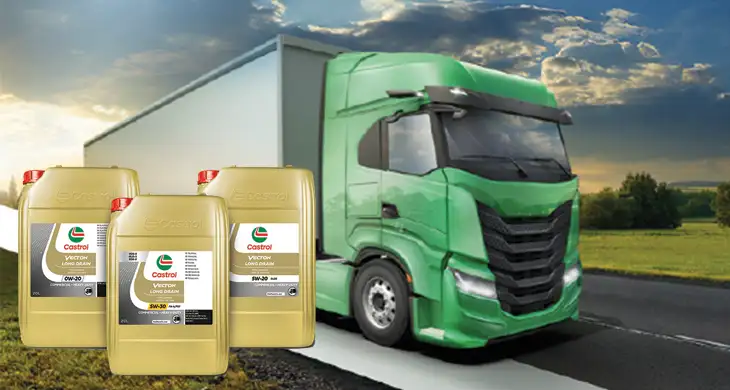
It’s Not Just About Viscosity – Why Oil Specs Are Important
Not All 5W-30 Oils Are the Same: Why Oil Specification Matters in a Commercial Vehicle Workshop
Walk into a commercial vehicle workshop and the number 5W-30 will be familiar. But there is a potentially expensive misconception hidden behind those numbers:
If the vehicle requires 5W-30, any 5W-30 engine oil will do.
It won’t. Two containers can both say 5W-30 on the label while the oils inside have been designed to meet very different performance requirements. They may have different additive technologies, different limits on sulphated ash, different high-temperature performance characteristics and, critically, completely different manufacturer approvals.
For workshop managers maintaining mixed fleets, understanding this distinction is increasingly important.
5W-30 tells you the viscosity – not the whole performance story
The SAE viscosity grade describes important aspects of how an oil flows at low and high temperatures. It does not, by itself, tell you whether that lubricant is suitable for a particular engine.
Think of 5W-30 as the size of the work boot, rather than its safety rating. Two pairs may be exactly the same size, but one might be a lightweight walking boot while another has a steel toe, chemical-resistant sole and specific workplace certification.
Engine oil works in much the same way. A modern commercial vehicle lubricant has to do considerably more than simply flow at the correct viscosity.
Depending on the engine, application and manufacturer requirements, the lubricant may need to deliver the appropriate levels of:
- Wear protection
- Piston cleanliness and deposit control
- Oxidation resistance
- Soot handling
- Shear stability
- High-temperature protection
- Aftertreatment compatibility
- Fuel-economy performance
- Extended-drain capability
- Protection against particulate-filter blocking
- Compatibility with EGR and SCR systems
This is where oil specifications and OEM approvals become essential.
The specification is just as important as the viscosity
A workshop may therefore encounter several products carrying the description 5W-30, but that does not make them interchangeable. Commercial vehicle engine oils can carry performance specifications including ACEA and API classifications, alongside approvals or specifications stipulated by individual vehicle and engine manufacturers. ACEA’s heavy-duty engine-oil sequences, for example, include categories such as E4, E7, E8 and E11. These categories have differing performance requirements and applicability depending on engine and emissions technology. ACEA itself advises that recommendations can differ between engine manufacturers and that the vehicle manufacturer’s requirements should be consulted. This matters because modern engines and emissions systems have become increasingly sophisticated. The lubricant is effectively an engineered component of the powertrain.

Same viscosity. Different job.
Imagine two drums sitting next to one another in a workshop:
Oil A – SAE 5W-30
Oil B – SAE 5W-30
They sound identical. But imagine Oil A has been formulated and approved for the specific heavy-duty diesel engines being serviced, while Oil B is a 5W-30 designed around an entirely different set of requirements. Oil B may flow like a 5W-30, but that tells you very little about whether it provides the required protection for that particular commercial vehicle. That distinction can affect areas including engine cleanliness, wear protection, oil-drain intervals and compatibility with exhaust aftertreatment equipment.
Some specifications are explicitly not interchangeable.
For example, the American Petroleum Institute states that API FA-4 oils – which include certain XW-30 lubricants – are not interchangeable or backwards compatible with CK-4, CJ-4 and several earlier diesel categories. Manufacturer recommendations must therefore be checked before FA-4 is used.
In other words:
Matching viscosity does not automatically mean matching application.
Why manufacturers specify particular oils
Vehicle manufacturers don’t create lubricant requirements simply to make servicing more complicated. Modern commercial vehicle engines are being asked to deliver several objectives simultaneously:
More power. Lower emissions. Better fuel efficiency. Longer service intervals. Greater durability.
Meanwhile, sophisticated EGR, SCR and diesel particulate filter systems have become integral parts of the vehicle. The lubricant has to operate successfully within this complete system. This is why manufacturers establish lubricant specifications and, in many cases, formal approval programmes. An approved lubricant has demonstrated that it meets the manufacturer’s defined performance requirements.
That is considerably more meaningful than simply saying:
“It’s a 5W-30.”
The aftertreatment system matters too
One particularly important consideration is exhaust aftertreatment. The wrong lubricant can potentially have consequences beyond the engine itself. ACEA’s current heavy-duty classifications differentiate between oils partly according to their suitability for engines fitted with particulate filters and other emissions technologies. For example, ACEA E8 and E11 impose lower sulphated-ash limits than E4 and E7.
Why does that matter?
Because lubricant formulation can influence the long-term performance of emissions-control equipment. Using the correct specification therefore helps protect not only lubricated engine components but the wider emissions system the manufacturer designed around them.
What about warranties?
Warranty is another reason workshops should pay close attention to specifications. A vehicle manufacturer’s servicing requirements normally specify the type and performance level of lubricant required. Where an OEM approval is stipulated, workshops should check that the product being used genuinely carries the appropriate approval or otherwise satisfies the manufacturer’s documented requirements. Simply using the correct viscosity grade is not sufficient evidence that the correct lubricant has been selected.
If an engine or aftertreatment failure subsequently occurs, service records and the lubricant used may form part of the investigation. Using an incorrect lubricant does not mean every warranty automatically becomes invalid. However, where a lubricant fails to meet the manufacturer’s stipulated requirements and that is relevant to the failure, it can create an avoidable warranty dispute.
For a professional workshop, the sensible approach is therefore straightforward:
Follow the manufacturer’s lubricant specification – not viscosity alone. Workshop efficiency shouldn’t mean one oil for everything
There are genuine advantages to lubricant rationalisation. Reducing the number of products held in a workshop can mean:
- Less stock
- Lower working capital
- Reduced risk of dispensing mistakes
- Simpler technician training
- Easier stock control
- Less potential for cross-contamination
But rationalisation should be based on specification coverage, not simply viscosity.
A workshop might ask:
“Can we use one 5W-30 across most of our fleet?”
The better question is:
“Is there a 5W-30 that carries the required specifications and approvals across these vehicles?”
Sometimes the answer will be yes.
Sometimes it won’t.
That difference is important.

Think of oil selection as a spider’s web
A useful way of visualising lubricant selection is as a spider or radar chart.
Put 5W-30 viscosity at the centre.
Around it sit the other requirements:
| OEM Approval | Wear Protection | Aftertreatment Compatibility | Deposit Control |
| Oxidation Stability | Soot Handling | Fuel Economy | Drain Interval |
Two oils may occupy exactly the same point for viscosity but create completely different shapes across the other performance requirements.
The correct lubricant is the one whose performance and approvals match the requirements of the engine – not simply the one with the same viscosity printed on the container.

To recap: Three things to check before putting oil into an engine
For every commercial vehicle entering the workshop, check:
- Viscosity
Is the SAE grade correct for the engine and operating conditions?
- Performance specification
Does the lubricant meet the required ACEA, API or other specified performance category?
- Manufacturer requirement or approval
Does it meet the exact OEM specification required for that engine?
Only when these requirements align should the workshop assume that the lubricant is appropriate.
One small decision can protect a very expensive asset
Engine oil represents a relatively small proportion of the operating cost of a commercial vehicle, the components it protects do not.
Engines, turbochargers, diesel particulate filters and emissions systems represent substantial investments, while an unexpected vehicle failure can also mean recovery costs, lost utilisation and disruption to customers.
Choosing oil purely because the viscosity appears correct is therefore a false economy.
For workshop managers, the message is simple:
Don’t just ask, “Is it 5W-30?”
Ask:
“Is it the RIGHT 5W-30?”
Correct viscosity.
Correct specification.
Correct manufacturer approval.
All three matter.
Kernow Oils can help commercial vehicle workshops review their lubricant requirements, identify the correct specifications across mixed fleets and explore opportunities to rationalise lubricant stocks without compromising manufacturer requirements.
ADVICE – SUPPLY – SUPPORT
For advice on what lubricants your fleet needs, or how best to rationalise your fleet lubricants, contact us today and we can help keep your fleet moving.
 September 9, 2026