The Hidden Cost of Transmission Failure: Why the Right Transmission Oil Matters
A commercial vehicle transmission works hard for every mile a vehicle is on the road. Yet when workshops look at ways to reduce operating costs, transmission oil can sometimes be treated as little more than another service item. That could be an expensive mistake.
For commercial vehicle workshop managers, reliability is everything. Every unexpected breakdown means more than the cost of replacing a component. It can mean vehicle recovery, workshop labour, replacement vehicles, missed deliveries, disrupted schedules and, ultimately, a vehicle that isn’t earning money.
That is why choosing the right transmission oil should be viewed as an investment in vehicle reliability rather than simply a lubricant purchase.
Transmission failure costs more than the repair
When a gearbox, differential or other driveline component develops a serious problem, the invoice for parts and labour is only the beginning.
The true cost can include:
Component repair or replacement
Modern transmissions are sophisticated pieces of equipment. Major repairs can quickly become expensive.
Vehicle recovery
A transmission failure away from the depot may require specialist recovery before a technician even begins diagnosing the problem.
Unplanned workshop time
Emergency repairs disrupt planned maintenance schedules and consume workshop capacity that could have been used for routine servicing and preventative maintenance.
Vehicle downtime
Perhaps the biggest hidden cost. A commercial vehicle sitting in the workshop isn’t generating revenue or completing its scheduled work.
Replacement vehicle costs
Operators may need to hire a vehicle or rearrange the fleet while repairs are completed.
Operational disruption
One unavailable vehicle can affect drivers, routes, deliveries, customers and other vehicles within the fleet.
Reputational cost
Repeated reliability problems can ultimately affect service levels and customer confidence. This changes the economics of lubricant selection.
The question shouldn’t simply be:
“How much does this transmission oil cost?”
A better question is:
“How effectively will this transmission oil help protect the vehicle and keep it working?”

What is transmission oil actually protecting?
Transmission systems operate under a demanding combination of load, pressure, friction and temperature.
The lubricant has several jobs to perform simultaneously. Depending on the transmission and application, these can include reducing wear between moving components, controlling friction, removing heat, protecting gears and bearings, supporting synchroniser operation and maintaining reliable shift performance.
Automatic transmissions create additional challenges because the fluid can also play an important hydraulic and friction-control role.
As Castrol explains, an effective automatic transmission oil requires characteristics including thermal stability, appropriate friction performance, load-carrying and anti-wear protection, viscosity stability and effective low-temperature flow. Manual transmission fluids also need to provide synchroniser compatibility, shift quality and protection against wear.
This is why simply putting “gear oil” or “ATF” into a vehicle isn’t enough.
The correct specification matters.
Workshop managers should always check the vehicle manufacturer’s requirements and ensure that the selected product carries the appropriate specification, approval or suitability statement for that particular application.
Where Castrol Transmax comes in
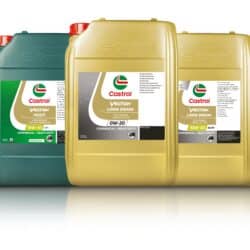
Castrol Transmax is Castrol’s range of transmission and driveline lubricants, covering automatic transmissions, manual transmissions, axles and other driveline applications.
The range has been developed to provide enhanced protection to critical moving parts, supporting transmission life, fleet productivity and extended drain intervals where the appropriate product and OEM requirements permit. For workshops responsible for commercial vehicles, this provides an opportunity to think beyond simply changing transmission oil and instead focus on driveline protection.
Smooth Drive Technology™: protection where it matters
Selected Castrol Transmax products incorporate Smooth Drive Technology™.
Castrol describes the technology as using active control molecules that automatically adjust their friction level as pressures and speeds change. The objective is to provide the transmission with the appropriate level of friction as operating conditions change, protecting components while maintaining smooth operation. That is important because the operating environment inside a transmission isn’t constant.
A commercial vehicle can experience cold starts, stop-start operation, high loads, motorway running and significant variations in temperature and operating conditions. The lubricant needs to continue performing throughout those changes.
Castrol reports that, depending on the particular Transmax product and test concerned, Smooth Drive Technology™ can deliver:
- More than 2x longer smooth shifts for applicable Transmax ATF/DUAL/CVT products versus the stated reference or competitor fluids in Castrol’s cited tests.
- 5x easier gear shifting at cold temperatures for specified Transmax manual products versus the referenced competitor mineral gear oil in independent testing.
- 5x stronger protective film for Transmax Axle Long Life 75W-90 versus the referenced commercial competitor mineral oil in Castrol’s in-house axle shock test.
Individual results relate to specific products, applications and test methodologies, so workshops should always select the correct Transmax product for the vehicle rather than treating these figures as universal across the range.

The lubricant can help reduce the cost of maintenance
Consider the maintenance equation:
Correct specification + premium transmission oil + correct service interval = greater protection against avoidable wear and downtime
Lubricants represent a relatively small part of the overall cost of operating a commercial vehicle, but they protect components representing a considerably larger investment. This is where focusing purely on lubricant purchase price can create a false economy. Saving money on a drum of transmission oil has little value if lubricant performance contributes to poor shift quality, accelerated wear, shortened lubricant life or avoidable maintenance. A premium lubricant should therefore be evaluated against the total cost of operating the vehicle, rather than simply its cost per litre.
Longer drain potential can mean fewer interruptions
Premium transmission oils can offer another important commercial advantage: extended lubricant life.
For example, Castrol Transmax Manual Z Long Life 75W-80 is a full synthetic product formulated with Smooth Drive Technology™ and developed for ZF extended drain interval requirements of up to 500,000 km, subject to the relevant equipment manufacturer’s requirements and operating conditions.
Castrol highlights its friction characteristics, thermal and oxidative stability, low-temperature fluidity and wear/EP performance as contributing to component protection and extended lubricant life. The important point isn’t simply “change the oil less often”. It is the potential to reduce maintenance interventions while continuing to provide the required protection. For a fleet workshop, fewer unnecessary interventions can mean less workshop time, lower lubricant consumption and greater vehicle availability.
One range doesn’t mean one oil
There is an important distinction here.
Choosing Castrol Transmax doesn’t mean using the same transmission oil in every vehicle. Different gearboxes, axles and transmission designs can require very different lubricant characteristics and OEM specifications. The Transmax commercial vehicle portfolio therefore includes products for automatic and semi-automatic transmissions, manual transmissions, axles and universal driveline applications.
For example, the range includes products carrying approvals or specifications associated with manufacturers including ZF, MAN, Mercedes-Benz, Volvo, Scania and others, depending on the individual Transmax product.
Always match the oil to the transmission – not simply the transmission to whatever oil happens to be in the workshop.
Product rationalisation without compromising specification
For mixed fleets, there can also be an opportunity to rationalise lubricant inventory. The objective shouldn’t be to find one oil and put it into everything. Instead, a lubricant review can identify where a carefully selected product legitimately covers multiple applications and specifications.
Done correctly, rationalisation can potentially mean:
- fewer products held in stock;
- reduced risk of technicians selecting the wrong lubricant;
- simpler workshop storage;
- easier stock management;
- clearer dispensing and identification; and
- less opportunity for cross-contamination.
But specification must always come first.
A simple way to look at transmission protection

Think of the transmission oil as the protective layer between an expensive asset and the operating conditions trying to wear it out:
ENGINE POWER & TORQUE
↓
TRANSMISSION
↓
Heat + Load + Pressure + Friction + Wear
↓
TRANSMISSION OIL PROTECTION
↓
Friction Control • Wear Protection • Thermal Stability • Component Protection • Shift Performance
↓
RELIABILITY
↓
Less Unplanned Downtime • Longer Component Life • Better Vehicle Availability • Lower Total Operating Cost
The lubricant might be hidden inside the transmission. Its value shouldn’t be.
Why workshops should consider Castrol Transmax
For a commercial vehicle workshop manager, lubricant selection should ultimately contribute to one objective: keeping vehicles working reliably.
Castrol says its commercial vehicle transmission fluids are designed to provide enhanced protection to critical components, help prevent wear and support longer transmission life. Its Transmax range includes solutions for manual and automatic transmissions as well as axles and universal driveline applications.
Combined with the appropriate OEM specifications and approvals, Castrol Transmax gives workshops a premium transmission oil solution focused on protection, performance and reliability.
And that can make the difference between viewing transmission oil as a workshop consumable and recognising it as what it really is:
Protection for one of the most valuable components on the vehicle.
Need help choosing the correct Castrol Transmax?
Kernow Oils can help commercial vehicle workshops review their existing transmission and driveline lubricants, identify the appropriate Castrol products and explore opportunities for lubricant rationalisation across mixed fleets.
Speak to Kernow Oils about Castrol commercial vehicle lubricants and transmission oil requirements.
Internal link: Kernow Oils – Commercial Vehicle Lubricants
Technical information: Castrol Commercial Vehicle Transmission Fluids
Product selection: Castrol Product Finder
For advice on what lubricants your fleet needs, or how best to rationalise your fleet lubricants, contact us today and we can help keep your fleet moving.
Kernow Oils
Email: info@kernow-oils.co.uk
Phone: 01736 757 002
Visit: kernow-oils.co.uk
 September 9, 2026